

Rolling Bearing Failure Analysis: Vibration, Temperature, Lubrication, Root Cause

Comments Off on Rolling Bearing Failure Analysis: Vibration, Temperature, Lubrication, Root Cause
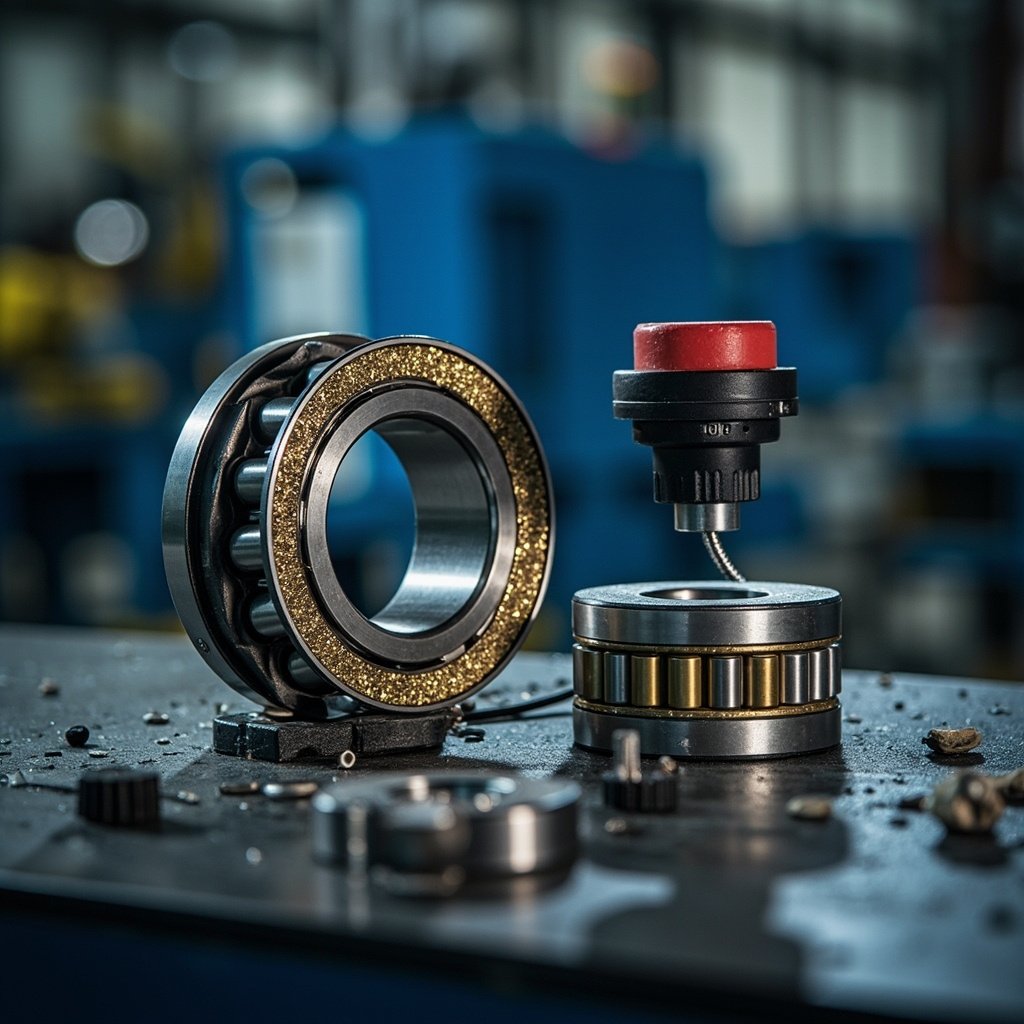
Rolling Bearing Failure Analysis: Vibration Signature, Temperature Pattern, Lubrication Condition, and Root Cause Identification
Introduction
In industrial automation, rolling bearings are critical components that facilitate smooth and efficient motion in machinery. Their reliability directly impacts the overall performance and uptime of automated systems. However, bearings are subject to various failure modes due to factors such as fatigue, misalignment, contamination, and improper lubrication. Understanding the mechanisms behind these failures is essential for implementing effective predictive maintenance strategies. This article delves into the comprehensive analysis of rolling bearing failures, focusing on vibration signature analysis, temperature pattern interpretation, lubrication condition evaluation, and root cause identification. By leveraging these techniques, engineers can proactively address potential issues, minimize downtime, and extend the operational life of bearings. This article will also reference specific bearing products, such as the [Roller Bearing REXROTH R151217052 for Linear Motion](https://ai-electrical.com/products/roller-bearing-rexroth-r151217052-for-linear-motion/), to provide practical context.
Vibration Frequency Analysis
Bearing Defect Frequencies
Vibration analysis is a powerful tool for diagnosing bearing faults. Each component of a rolling bearing has a characteristic frequency at which it generates vibrations when defective. These frequencies are calculated based on the bearing’s geometry and rotational speed. The key defect frequencies include:
- BPFO (Ball Pass Frequency Outer race): The frequency at which the rolling elements pass over a defect on the outer race.
- BPFI (Ball Pass Frequency Inner race): The frequency at which the rolling elements pass over a defect on the inner race.
- BSF (Ball Spin Frequency): The frequency at which a rolling element rotates around its own axis.
- FTF (Fundamental Train Frequency): The rotational frequency of the cage.
The table below provides a summary of these defect frequencies and their formulas:
“`html
| Defect Frequency | Formula | Description |
|---|---|---|
| BPFO | 0.5 * Z * (1 + (Bd * cos(β) / Pd)) * RPM | Outer race defect frequency |
| BPFI | 0.5 * Z * (1 – (Bd * cos(β) / Pd)) * RPM | Inner race defect frequency |
| BSF | (Pd * RPM) / (2 * Bd * cos(β)) | Rolling element defect frequency |
| FTF | (RPM * (1 – (Bd * cos(β) / Pd))) / 2 | Cage defect frequency |
“`
Where:
- Z = Number of rolling elements
- Bd = Ball diameter
- Pd = Pitch diameter
- β = Contact angle
- RPM = Rotational speed in revolutions per minute
Vibration Spectrum Interpretation
When a defect is present, the vibration spectrum will exhibit peaks at the corresponding defect frequencies and their harmonics. For instance, a defect on the outer race will manifest as a peak at BPFO, while an inner race defect will show a peak at BPFI. The [Conveyor SKF COP.01BCP507GRAT 01BCP507EXAT Bearing](https://ai-electrical.com/products/conveyor-skf-cop-01bcp507grat-01bcp507exat-bearing/) is an example of a bearing that can benefit from such analysis, as it is often used in critical applications where failure is not an option.
Temperature Pattern Interpretation
Normal and Alarm Thresholds
Temperature monitoring is another crucial aspect of bearing health assessment. The normal operating temperature for most bearings ranges from 40°C to 70°C. However, it is essential to consider the temperature rise rate rather than just the absolute value. An abrupt temperature increase can indicate severe issues such as lubrication failure or excessive loading.
- Alarm Threshold: 85°C
- Danger Threshold: 100°C
Temperature Measurement Methods
Several tools can be used to measure bearing temperature:
- PT100 Sensors: These are precision resistance thermometers that offer high accuracy.
- Thermocouples: These are cost-effective and suitable for a wide temperature range.
- Infrared (IR) Guns: These provide non-contact temperature measurement, which is useful for inaccessible bearings.
The [ABB HZTL453757R0001 Turbocharger Bearing Kit Industrial](https://ai-electrical.com/products/abb-hztl453757r0001-turbocharger-bearing-kit-industrial/) is an example of a high-performance bearing that requires precise temperature monitoring to ensure optimal performance and longevity.
Lubrication Condition Evaluation
Oil Analysis
Lubrication is vital for reducing friction and wear in bearings. Oil analysis involves assessing several parameters:
- Viscosity: Ensures the oil is within the specified range for the operating conditions.
- Water Content: High water content can lead to corrosion and reduced lubrication effectiveness.
- Particle Count: Indicates the level of contamination and potential for wear.
- Wear Metal Concentration: Elevated levels of wear metals suggest internal component degradation.
Grease Analysis
For grease-lubricated bearings, the following aspects are critical:
- Consistency (NLGI Grade): Determines the grease’s ability to stay in place and provide adequate lubrication.
- Base Oil Separation: Excessive separation can lead to inadequate lubrication.
Re-lubrication Interval Calculation
The re-lubrication interval depends on factors such as bearing type, operating conditions, and lubrication method. It is essential to adhere to manufacturer guidelines and adjust based on the analysis results.
Failure Mode Identification
Common Failure Modes
- Fatigue Spalling: Caused by repeated stress cycles, leading to surface cracking and pitting.
- Misalignment: Improper alignment causes uneven loading and accelerated wear.
- Contamination: Particles in the lubricant can cause abrasive wear and damage.
- Overload Brinelling: Excessive loads can cause permanent deformation of the raceways.
Examination of Components
To identify the failure mode, it is necessary to examine the following components:
- Raceways: Look for signs of wear, pitting, or cracking.
- Rolling Elements: Check for spalling, scratches, or discoloration.
- Cage: Ensure it is intact and not causing interference.
- Seals: Verify they are not damaged, as compromised seals can lead to contamination.
The [Deep Groove Ball Bearing FAG 62210-A-2RSR Sealed Unit](https://ai-electrical.com/products/deep-groove-ball-bearing-fag-62210-a-2rsr-sealed-unit/) is an example of a bearing that relies on effective seals to prevent contamination and maintain lubrication.
Root Cause Analysis Method
Collection and Examination
The process of root cause analysis involves:
- Collecting the Failed Bearing: Ensure it is preserved in its failed state for thorough examination.
- Photographing the Condition: Document the visible signs of failure.
- Measuring Internal Clearance: Assess if the clearance has changed, which can indicate wear or deformation.
- Examining the Lubricant: Analyze the lubricant for contamination, degradation, or inadequate properties.
- Correlating with Operating Data: Compare the findings with operational parameters such as load, speed, and temperature.
Tools and Techniques
- Microscopic Analysis: For detailed examination of surface defects.
- Dimensional Measurement: To check for wear and deformation.
- Spectroscopic Analysis: To identify wear metals and contaminants in the lubricant.
Mounting and Fit Verification
Shaft and Housing Fits
Proper mounting is critical for bearing performance. The shaft fit typically ranges from k5 to m5, while the housing fit is usually H7. These fits ensure adequate interference and prevent bearing movement.
Internal Clearance Reduction
Interference fits can reduce the internal clearance of the bearing. It is essential to account for this reduction to maintain the desired operational clearance.
Mounting Methods
- Cold Mounting: Using a press to fit the bearing onto the shaft.
- Hydraulic or Induction Heating: Heating the bearing to expand it for easier mounting.
The [SKF-EWELLIX LBBR 16-2LS Linear Bearing 16 mm Bore](https://ai-electrical.com/products/skf-ewellix-lbbr-16-2ls-linear-bearing-16-mm-bore/) is an example of a bearing that requires precise mounting to ensure optimal performance.
Predictive Maintenance Program
Monitoring and Analysis
A robust predictive maintenance program includes:
- Vibration Monitoring: Conducted monthly to detect early signs of wear.
- Temperature Trending: Continuous monitoring to identify trends and anomalies.
- Oil Analysis: Quarterly analysis to assess lubricant condition and detect wear.
- Ultrasonic Monitoring: For early detection of incipient faults.
Benefits
Implementing a predictive maintenance program can lead to:
- Reduced Downtime: Proactive maintenance minimizes unplanned outages.
- Lower Maintenance Costs: Early detection prevents costly repairs.
- Extended Bearing Life: Optimal operating conditions extend the bearing’s lifespan.
Bearing Replacement Decision
Criteria for Replacement
Bearing replacement should be considered when:
- Vibration Exceeds ISO 10816 Zone C/D: Indicates severe wear or damage.
- Temperature Exceeds Alarm Threshold: Suggests potential lubrication or loading issues.
- Oil Analysis Shows Elevated Wear Metals: Indicates internal component degradation.
Replacement Process
The replacement process involves:
- Selection of Replacement Bearing: Ensure it matches the original specifications.
- Inspection of the Application: Check for any factors that may have contributed to the failure.
- Proper Installation: Follow manufacturer guidelines to prevent premature failure.
Frequently Asked Questions
1. How often should I perform vibration analysis on my bearings?
Vibration analysis should be conducted monthly as part of a routine maintenance schedule. However, the frequency may need to be increased based on the criticality of the application and the operating conditions.
2. What is the ideal operating temperature for bearings?
The ideal operating temperature ranges from 40°C to 70°C. However, it is crucial to monitor the temperature rise rate, as abrupt changes can indicate problems.
3. How can I determine the re-lubrication interval for my bearings?
The re-lubrication interval depends on factors such as bearing type, operating conditions, and lubrication method. It is recommended to follow manufacturer guidelines and adjust based on oil analysis results.
4. What are the common failure modes for rolling bearings?
Common failure modes include fatigue spalling, misalignment, contamination, and overload brinelling. Each mode has distinct characteristics that can be identified through examination.
5. How do I know when to replace a bearing?
Bearing replacement should be considered when vibration exceeds ISO 10816 Zone C/D, temperature exceeds the alarm threshold, or oil analysis shows elevated wear metals.
Conclusion
Effective rolling bearing failure analysis is essential for maintaining the reliability and efficiency of industrial machinery. By understanding the vibration signatures, temperature patterns, and lubrication conditions, engineers can identify potential issues before they escalate into catastrophic failures. Implementing a comprehensive predictive maintenance program and adhering to proper mounting and fitting procedures are crucial steps in ensuring the longevity and optimal performance of bearings. For high-quality bearing products, consider the [INA KWVE25-B-H Linear Guide Block Precision Motion](https://ai-electrical.com/products/ina-kwve25-b-h-linear-guide-block-precision-motion/), which offers precision and durability for demanding applications.
Call to Action
Browse our wide range of industrial bearings and accessories to find the perfect solution for your needs. Whether you require linear motion bearings, turbocharger bearings, or deep groove ball bearings, we have the expertise and products to meet your requirements. Visit our website to explore our offerings and take the first step towards enhancing the reliability of your machinery.