

TSN Network Deployment: A Complete Guide to Time-Sensitive Networking Implementation

Comments Off on TSN Network Deployment: A Complete Guide to Time-Sensitive Networking Implementation
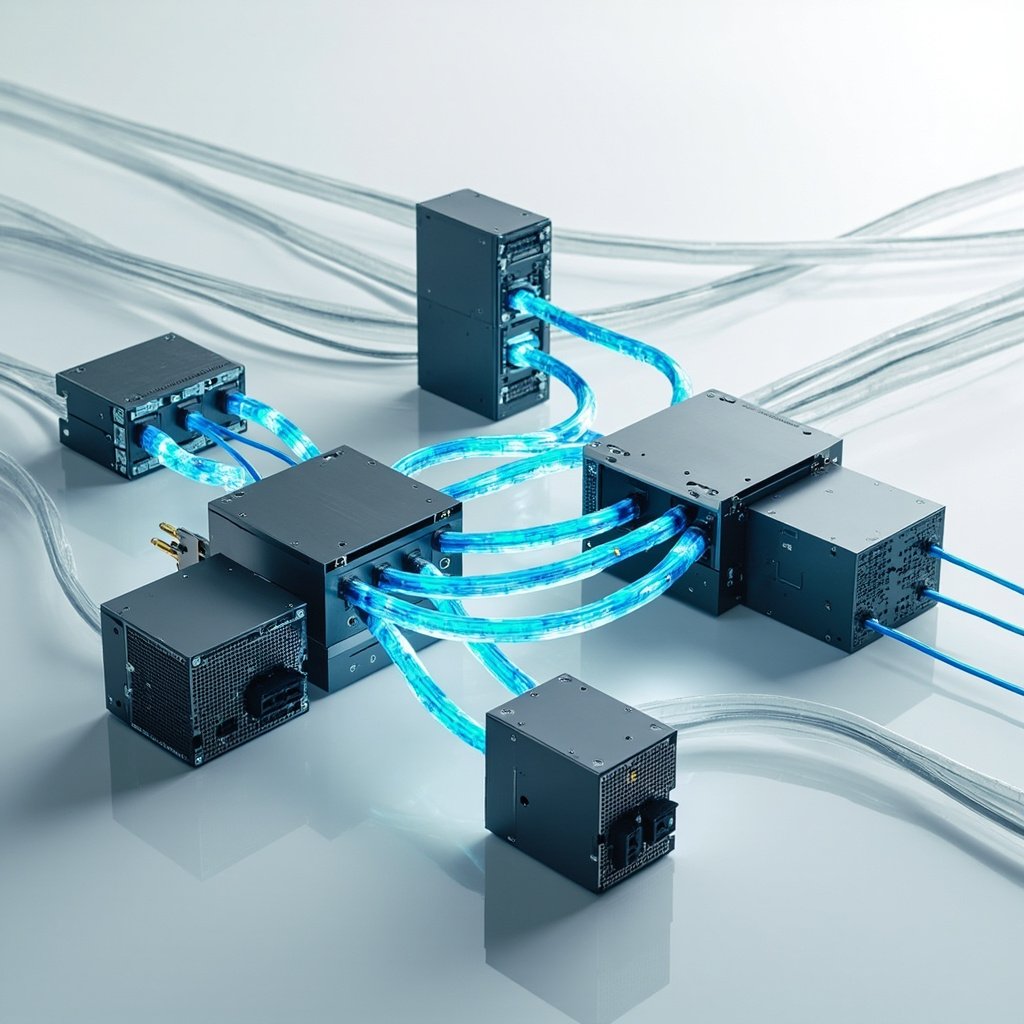
As industries rapidly evolve toward Industry 4.0, edge computing, and the Industrial Internet of Things (IIoT), the demand for deterministic, low-latency, and highly reliable communication networks has never been greater. TSN (Time-Sensitive Networking) network deployment has emerged as the gold standard for organizations that require guaranteed packet delivery, synchronized timing, and real-time performance across converged Ethernet infrastructures. This comprehensive guide explores the fundamentals, standards, deployment strategies, challenges, and best practices for implementing TSN in modern industrial and enterprise environments.
What Is Time-Sensitive Networking (TSN)?
Time-Sensitive Networking is a set of IEEE 802.1 standards that extend standard Ethernet to support deterministic, time-critical data transmission. Traditional Ethernet is best-effort and non-deterministic, which makes it unsuitable for applications such as robotics control, vehicle networking, professional audio/video, and power grid automation. TSN addresses this by introducing mechanisms for traffic shaping, time synchronization, path reservation, and frame preemption.
By leveraging TSN, enterprises can run converged networks where operational technology (OT), information technology (IT), and real-time control traffic all coexist on the same physical infrastructure—reducing cost, complexity, and cabling overhead.
Key IEEE 802.1 Standards That Power TSN
TSN is not a single standard but a collection of sub-standards, each addressing a specific networking requirement. The table below highlights the most important ones used in TSN network deployment.
| Standard | Function | Deployment Benefit |
|---|---|---|
| IEEE 802.1AS | Time synchronization (gPTP) | Sub-microsecond clock accuracy across devices |
| IEEE 802.1Qbv | Time-Aware Shaper (TAS) | Scheduled traffic gates for deterministic latency |
| IEEE 802.1Qbu / 802.3br | Frame Preemption | Minimizes interference from low-priority traffic |
| IEEE 802.1Qcc | Stream Reservation Protocol enhancements | Centralized, distributed, or hybrid network configuration |
| IEEE 802.1CB | Frame Replication and Elimination for Reliability (FRER) | Zero-loss redundancy for critical streams |
| IEEE 802.1Qcr | Asynchronous Traffic Shaping (ATS) | Scalable shaping without tight time synchronization |
Core Benefits of TSN Network Deployment
- Deterministic Latency: Guarantees bounded end-to-end delays, often below 100 microseconds, enabling precise motion control and machine-to-machine communication.
- Converged Infrastructure: Combines real-time control, video streaming, voice, and best-effort IT traffic over a single Ethernet fabric.
- Vendor Interoperability: TSN is an open IEEE standard, allowing switches, controllers, and endpoints from different vendors to interoperate seamlessly.
- High Reliability: With FRER and redundancy features, TSN delivers packet-loss-free communication essential for safety-critical systems.
- Future-Proof Investment: Supports migration to higher bandwidths (1G, 10G, 25G, and beyond) without redesigning the entire architecture.
⚠ Deployment Tip: Before designing a TSN network, perform a thorough traffic audit. Identify all time-critical flows, their bandwidth needs, cycle times, and acceptable jitter. This will determine whether you need Time-Aware Shaping, Asynchronous Traffic Shaping, or a hybrid model—and ultimately, which switches and silicon platforms can support your requirements.
Step-by-Step TSN Network Deployment Process
A successful TSN deployment follows a structured methodology. Below is a proven framework used by industrial integrators and network engineers.
- Requirements Gathering: Map all applications, devices, and traffic classes. Define jitter, latency, and packet-loss tolerances for each flow.
- Network Topology Design: Decide between line, ring, or mesh topologies. For high availability, dual-ring TSN fabrics with FRER are common in automotive and power-grid deployments.
- Selection of TSN-Capable Hardware: Choose switches and NICs based on TSN feature support. Look for chipsets that implement 802.1Qbv, 802.1AS, and 802.1CB natively.
- Time Synchronization Setup: Configure a Grandmaster clock using gPTP (IEEE 802.1AS) and verify sub-microsecond accuracy with PTP-aware test equipment.
- Traffic Scheduling & Configuration: Use the CNC (Centralized Network Configuration) or distributed control model (per IEEE 802.1Qcc) to allocate time slots for critical traffic.
- Testing & Validation: Validate with tools like Wireshark TSN dissectors, Ixia Anue, or Spirent TestCenter to confirm bounded latency, zero congestion loss, and proper stream reservation.
- Pilot, Monitor, and Scale: Start with a small pilot segment, monitor KPIs, then roll out across the full plant or facility.
TSN vs. Traditional Industrial Ethernet
Many organizations still rely on proprietary industrial Ethernet protocols like PROFINET, EtherCAT, or EtherNet/IP. While these work well, they typically require dedicated networks. TSN, on the other hand, allows these protocols—and new ones—to operate concurrently on shared infrastructure. The comparison below clarifies the difference.
| Feature | Traditional Industrial Ethernet | TSN-Enabled Network |
|---|---|---|
| Determinism | Vendor-specific, often isolated | Standardized, multi-vendor |
| Convergence | Separate physical networks | Single unified Ethernet fabric |
| Scalability | Limited by protocol architecture | Highly scalable, multi-domain |
| Interoperability | Vendor lock-in risk | Open IEEE standard ecosystem |
| Cost of Ownership | Higher (multiple networks) | Lower (one converged network) |
Real-World Use Cases of TSN Deployment
TSN is no longer theoretical—it is being actively deployed across multiple industries. Below are the most prominent application areas:
- Automotive In-Vehicle Networks: TSN supports zonal architectures in next-generation vehicles, replacing legacy CAN and FlexRay with deterministic Ethernet backbones.
- Smart Manufacturing: Enables synchronized robotics, machine vision, and PLCs on a single network in Industry 4.0 factories.
- Professional Audio/Video (ProAV): Standards like SMPTE ST 2110 rely on TSN for jitter-free broadcast production.
- Power & Energy: IEC 61850-3 compliant substations use T