

Industry 4.0 vs Industry 5.0: The Complete Smart Factory Transition Guide

Comments Off on Industry 4.0 vs Industry 5.0: The Complete Smart Factory Transition Guide
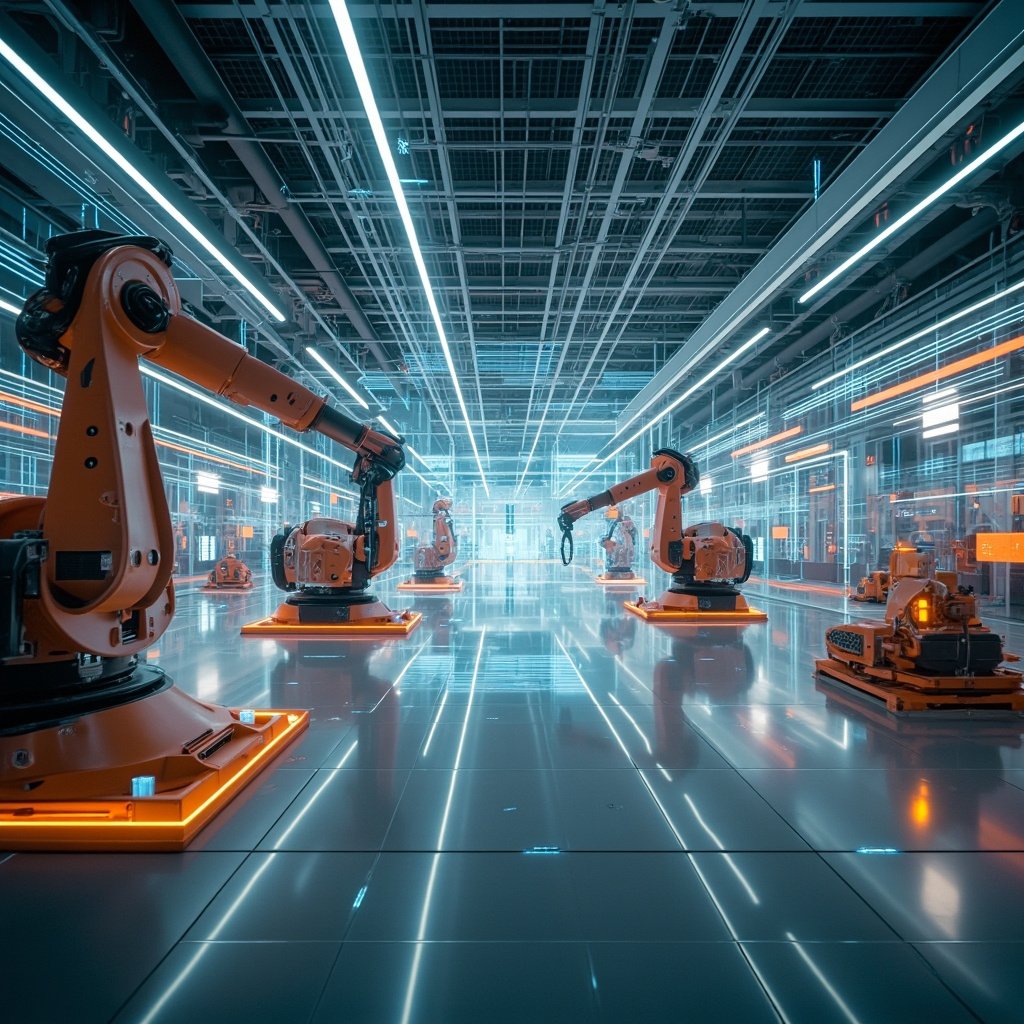
The manufacturing landscape is undergoing a dramatic transformation as industries worldwide transition from the digital integration of Industry 4.0 to the human-centric innovations of Industry 5.0. This comprehensive guide explores the evolution of smart factories, examining how the next generation of manufacturing technologies is reshaping production processes, enhancing workforce collaboration, and creating more sustainable industrial ecosystems. Whether you’re a plant manager, operations director, or manufacturing professional, understanding this paradigm shift is essential for staying competitive in an increasingly automated world.
Understanding Industry 4.0: The Foundation of Smart Manufacturing
Industry 4.0 represents the fourth industrial revolution, characterized by the fusion of physical manufacturing operations with digital technologies, the Internet of Things (IoT), and artificial intelligence. First introduced in Germany around 2011, this paradigm shift marked a departure from manual production methods toward fully connected, data-driven manufacturing environments.
Core Technologies Driving Industry 4.0
- Internet of Things (IoT): Networked sensors and devices collecting real-time data across production lines
- Big Data Analytics: Processing massive datasets to derive actionable manufacturing insights
- Cloud Computing: Enabling scalable storage and computational resources for manufacturing applications
- Cyber-Physical Systems: Integrating physical machinery with digital monitoring and control systems
- Additive Manufacturing: 3D printing technologies enabling rapid prototyping and custom production
- Robotics and Automation: Collaborative robots working alongside human operators
Industry 4.0 fundamentally changed how factories operate by introducing digital twins, predictive maintenance, and fully automated production workflows. These technologies enabled manufacturers to achieve unprecedented levels of efficiency, reduce downtime, and optimize supply chain management through real-time visibility into every aspect of operations.
The Emergence of Industry 5.0: Human-Centric Manufacturing
While Industry 4.0 focused primarily on automation and efficiency, Industry 5.0 represents a philosophical shift toward human-machine collaboration and sustainability. The European Commission formally recognized Industry 5.0 in 2021, emphasizing the importance of placing worker well-being at the center of manufacturing processes while maintaining technological advancement.
💡 Key Insight: Industry 5.0 doesn’t replace Industry 4.0—it builds upon it. The new paradigm retains all the digital infrastructure and automation capabilities while introducing a critical element that machines alone cannot provide: human creativity, intuition, and problem-solving abilities.
Defining Characteristics of Industry 5.0
- Human-Machine Collaboration: Workers and intelligent machines operating as partners rather than in isolation
- Sustainability and Circular Economy: Designing products for reuse, recycling, and minimal environmental impact
- Personalization and Flexibility: Mass customization enabling products tailored to individual customer needs
- Resilience and Adaptability: Manufacturing systems capable of responding rapidly to disruptions
- Workforce Well-being: Creating ergonomically optimized environments that enhance job satisfaction
- Transparency and Ethics: Responsible AI deployment with clear traceability in decision-making
Industry 4.0 vs Industry 5.0: A Comprehensive Comparison
Understanding the differences between these two industrial revolutions is crucial for manufacturers planning their technology roadmap. The following comparison highlights key distinctions across critical operational dimensions:
| Dimension | Industry 4.0 | Industry 5.0 |
|---|---|---|
| Primary Focus | Automation and efficiency optimization | Human-centric innovation and sustainability |
| Role of Humans | Supervision and system oversight | Active collaboration and creative input |
| Technology Approach | Replace human tasks with machines | Augment human capabilities with AI |
| Environmental Focus | Energy efficiency improvements | Circular economy and carbon neutrality |
| Production Philosophy | Standardization and mass production | Customization and mass personalization |
| Decision-Making | Data-driven autonomous decisions | Human-guided AI decisions with transparency |
Smart Factory Technologies: From Implementation to Optimization
Advanced Robotics and Cobots
Collaborative robots (cobots) represent a cornerstone of both Industry 4.0 and Industry 5.0 smart factories. Unlike traditional industrial robots that operate in isolated cells, cobots are designed to work safely alongside human workers, handling repetitive, physically demanding, or precision-critical tasks while humans focus on activities requiring cognitive skills, problem-solving, and adaptability.
Artificial Intelligence and Machine Learning
AI and machine learning form the intelligent backbone of modern smart factories. These technologies power everything from predictive maintenance algorithms that anticipate equipment failures before they occur to quality control systems that detect defects with superhuman accuracy. In Industry 5.0, AI increasingly serves as a collaborative tool that enhances human decision-making rather than replacing it entirely.
- Predictive Analytics: Forecasting demand, maintenance needs, and quality issues
- Computer Vision: Automated inspection and visual quality assurance
- Natural Language Processing: Enabling voice-controlled factory systems and documentation
- Reinforcement Learning: Optimizing production parameters through autonomous experimentation
Digital Twins and Simulation
Digital twin technology creates virtual replicas of physical assets, processes, and even entire factories. These digital counterparts enable manufacturers to simulate changes, test optimization strategies, and train personnel without disrupting actual production. The integration of digital twins with AI systems allows for real-time synchronization between physical and virtual environments, providing unprecedented visibility into factory operations.
Transitioning from Industry 4.0 to Industry 5.0: A Strategic Roadmap
The transition from Industry 4.0 to Industry 5.0 is not a sudden leap but rather a gradual evolution that builds upon existing digital infrastructure. Manufacturers must approach this transformation strategically, balancing technological investments with workforce development and organizational change management.
Phased Implementation Approach
| Phase | Timeline | Key Activities | Expected Outcomes |
|---|---|---|---|