

Industrial Camera Lighting Guide: Best Practices & Techniques

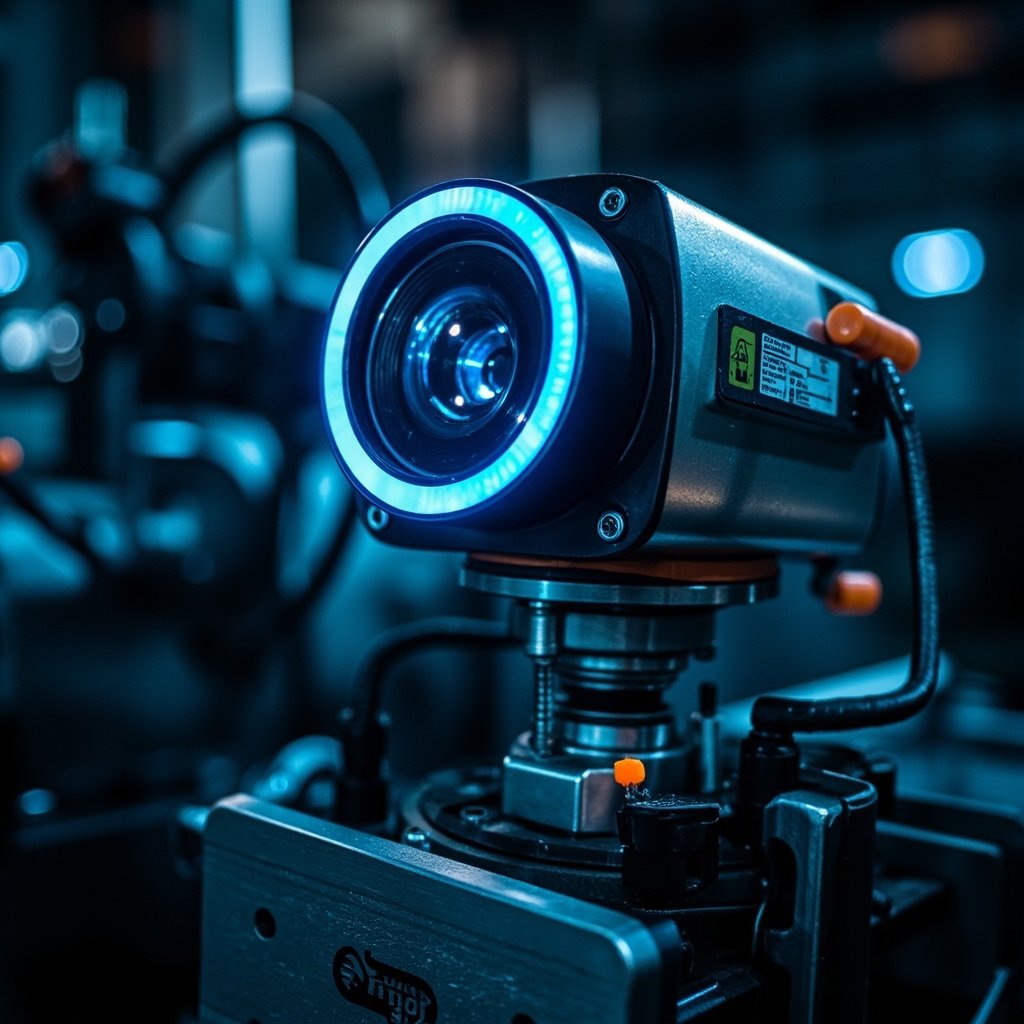
Industrial camera lighting is a critical component in machine vision and industrial automation systems, directly influencing image quality, inspection accuracy, and overall production efficiency. Whether you’re implementing automated quality control, robotic guidance, or high-speed inspection processes, selecting the appropriate lighting configuration can mean the difference between flawless defect detection and costly production errors. This comprehensive guide explores everything you need to know about industrial camera lighting solutions, from fundamental principles to advanced implementation strategies that optimize your vision system’s performance.
Ultraviolet lighting enables inspection techniques impossible with visible light. UV illumination causes certain materials to fluoresce, revealing adhesive residues, lubricant contamination, and biological materials invisible under normal lighting. Infrared lighting penetrates beneath surface layers in some materials, revealing subsurface defects and enabling inspection through certain packaging materials.
Understanding the Fundamentals of Industrial Lighting
Industrial camera lighting serves multiple essential purposes in machine vision applications. Proper illumination enhances contrast, eliminates shadows, reveals surface defects, and ensures consistent image acquisition across varying production conditions. Without adequate lighting, even the most sophisticated cameras and algorithms cannot achieve reliable inspection results. The relationship between lighting and image quality is fundamental—approximately 90% of machine vision success depends on proper lighting design, making it the single most important factor in system performance. Modern industrial environments present numerous lighting challenges that require careful consideration. Ambient light fluctuations, reflective surfaces, moving objects, and varying material properties all impact lighting requirements. Environmental factors such as temperature variations, vibration, and electromagnetic interference further complicate lighting selection for industrial applications. Understanding these challenges enables engineers to design robust lighting solutions that maintain consistent performance despite production environment variations.Types of Industrial Camera Lighting Technologies
LED Lighting Solutions
LED lighting has emerged as the dominant technology in industrial vision applications due to its numerous advantages. Modern LED lights offer exceptional longevity, with operational lifetimes exceeding 50,000 hours, significantly reducing maintenance requirements and total cost of ownership. The ability to precisely control LED intensity and pulse timing makes them ideal for high-speed inspection applications where exposure synchronization is critical.
Pro Tip: When selecting LED lighting for your industrial vision system, always verify the light’s spectral output matches your camera’s sensitivity curve. Matching these characteristics can improve signal-to-noise ratio by up to 40%, resulting in more accurate inspection results and reduced false rejection rates.
LED lights are available in various form factors designed for specific applications. Ring lights provide even illumination directly in front of the camera, minimizing shadows and ideal for general-purpose inspection. Bar lights offer linear illumination suitable for scanning applications and conveyor systems. Coaxial lights illuminate surfaces from behind the camera axis, effectively eliminating specular reflections from shiny surfaces. Dome lights create diffuse, shadow-free illumination perfect for highly reflective or curved objects.
Fluorescent and HID Lighting
While LED technology dominates modern applications, fluorescent lighting still serves specific industrial vision needs. Traditional fluorescent lights provide excellent diffuse illumination and are cost-effective for large-area illumination requirements. However, their tendency to flicker at mains frequencies and shorter operational lifetimes have reduced their popularity in new implementations. High-intensity discharge (HID) lamps produce extremely bright, concentrated light suitable for long-distance illumination and outdoor industrial applications. These lights generate significant heat and require warm-up time, making them less suitable for precision inspection applications. HID lighting finds use in specialized applications such as large-scale dimensional measurement and outdoor vehicle identification systems where maximum light output is essential.Lighting Techniques for Industrial Vision Systems
Bright Field vs. Dark Field Illumination
Bright field illumination represents the most common lighting technique, where light reflects directly off the object toward the camera. This method works exceptionally well for capturing surface features, text, and codes that reflect light back to the imaging system. Bright field lighting emphasizes differences between illuminated and non-illuminated areas, making it ideal for presence/absence verification and surface inspection applications. Dark field illumination takes a fundamentally different approach by capturing only light that scatters off surface features. In this configuration, the camera views only light reflected at angles away from the direct illumination path. This technique excels at revealing scratches, surface contamination, and subtle dimensional variations that remain invisible under bright field conditions. Dark field lighting transforms surface defects into visible features by scattering light across them while the surrounding flat surface appears dark.Back Lighting and Transmission Methods
Back lighting positions the light source behind the target object, creating a silhouette effect that emphasizes object edges and contours. This technique provides maximum contrast for dimensional measurement, hole detection, and part orientation verification. Backlit images reveal internal features and transparency variations that are impossible to detect with front illumination approaches. Transmission lighting is essential for inspection of transparent materials including glass, plastic films, and liquid-filled containers. By measuring light passing through the material, vision systems can detect bubbles in glass, contamination in liquids, and thickness variations in film materials. The intensity reduction through the material provides quantifiable data for process control and quality assurance.Selecting the Right Light Spectrum
The spectral characteristics of your lighting dramatically impact inspection capabilities. Different wavelengths interact uniquely with various materials and features, making spectrum selection a critical design decision. Visible light remains appropriate for applications requiring human-comparable inspection results and color-based defect classification.| Light Type | Wavelength Range | Primary Applications | Key Advantages |
|---|---|---|---|
| Red LED | 620-630 nm | General inspection, code reading | High contrast, economical |
| Green LED | 520-540 nm | PCB inspection, silicon wafers | Matches CCD sensitivity |
| Blue LED | 460-480 nm | Copper inspection, blood analysis | Enhances metallic features |
| UV Light | 365-405 nm | Fluorescence inspection, contaminants | Reveals invisible features |
| IR Light | 850-940 nm | Heat inspection, organic materials | Penetrates surfaces, reduces glare |
Lighting Configuration for Common Applications
Surface Inspection Systems
Effective surface inspection lighting requires careful consideration of surface properties and defect characteristics. Highly reflective surfaces demand diffuse lighting to minimize specular reflections that overwhelm camera sensors. Dome lighting provides the ideal solution for shiny metallic parts and polished plastic components, surrounding the target with light from all angles to eliminate directional reflections. Matte surfaces respond well to directional lighting that creates subtle shadows highlighting surface irregularities. Low-angle dark field illumination proves particularly effective for detecting micro-scratches, surface contamination, and finishing variations. By illuminating the surface at grazing angles, this technique creates shadows along defect edges while maintaining a dark background for maximum contrast.Code and Character Reading Applications
2D barcode and QR code reading requires consistent, uniform illumination across the entire code area. Diffuse dome lighting eliminates hot spots and reflections that cause reading failures, ensuring reliable decode rates even on curved or reflective surfaces. For conveyor-based applications, linear lighting arrays provide intense, uniform illumination synchronized with camera exposure. Optical character recognition (OCR) demands high contrast between characters and their backgrounds. Backlit segment lighting creates crisp character silhouettes ideal for stamped, printed, or laser-marked text. For recessed or embossed characters, front lighting with appropriate angles enhances edge definition by casting subtle shadows within character strokes.Dimensional Measurement Applications
Precision dimensional measurement requires lighting that enhances edge definition without introducing measurement errors. Telecentric lighting ensures parallel light rays that eliminate perspective errors, providing accurate measurements regardless of object distance variations. This technique proves essential for high-precision gaging applications where sub-pixel measurement accuracy is required. For measurement of cylindrical objects, specialized axial lighting illuminates the entire circumference uniformly, eliminating the shadow problems inherent in directional lighting. Line scan lighting combined with line scan cameras enables continuous dimensional monitoring of extruded profiles and long manufactured parts at high speeds.Advanced Lighting Technologies and Trends
Structured Lighting and 3D Vision
Structured light illumination projects known patterns onto target surfaces, enabling 3D reconstruction through pattern deformation analysis. Laser line projectors create reference lines whose shape reveals surface contours, enabling high-speed profile measurement and volume estimation. This technique forms the foundation of many bin-picking and robotic manipulation systems. Pattern projection systems using digital light processing (DLP) projectors can dynamically adjust projected patterns for optimal feature enhancement. Multi-frequency phase-shifting techniques achieve sub-millimeter accuracy in 3D measurements by analyzing phase differences between projected and observed patterns. These advanced approaches enable inspection of complex 3D assemblies and verification of component placement on multi-level circuit boards.Smart Lighting with Integrated Control
Modern intelligent lighting systems incorporate on-board controllers enabling software-defined intensity, timing, and strobing behavior. Programmable lighting allows a single light to serve multiple inspection modes, reducing system complexity and cost. Integrated sensors monitor light output and automatically compensate for aging and temperature effects, maintaining consistent illumination over time. Strobe lighting technology enables extremely high-intensity illumination during brief camera exposure periods, effectively freezing fast-moving production without compromising illumination levels. Pulsed LED lighting can achieve peak intensities many times higher than continuous operation while reducing heat generation and power consumption. This approach proves essential for high-speed bottling lines, web inspection systems, and semiconductor wafer handling applications.Installation Best Practices for Industrial Environments
Proper lighting installation requires attention to mechanical, electrical, and optical considerations. Light positioning relative to the camera and target significantly impacts illumination uniformity and defect visibility. Document all light positions and settings during initial system qualification to enable rapid recovery from maintenance activities or equipment relocation.- Mount lights securely using vibration-dampening fixtures to prevent mechanical instability and premature failure in industrial environments.
- Shield lights from ambient interference using enclosures or