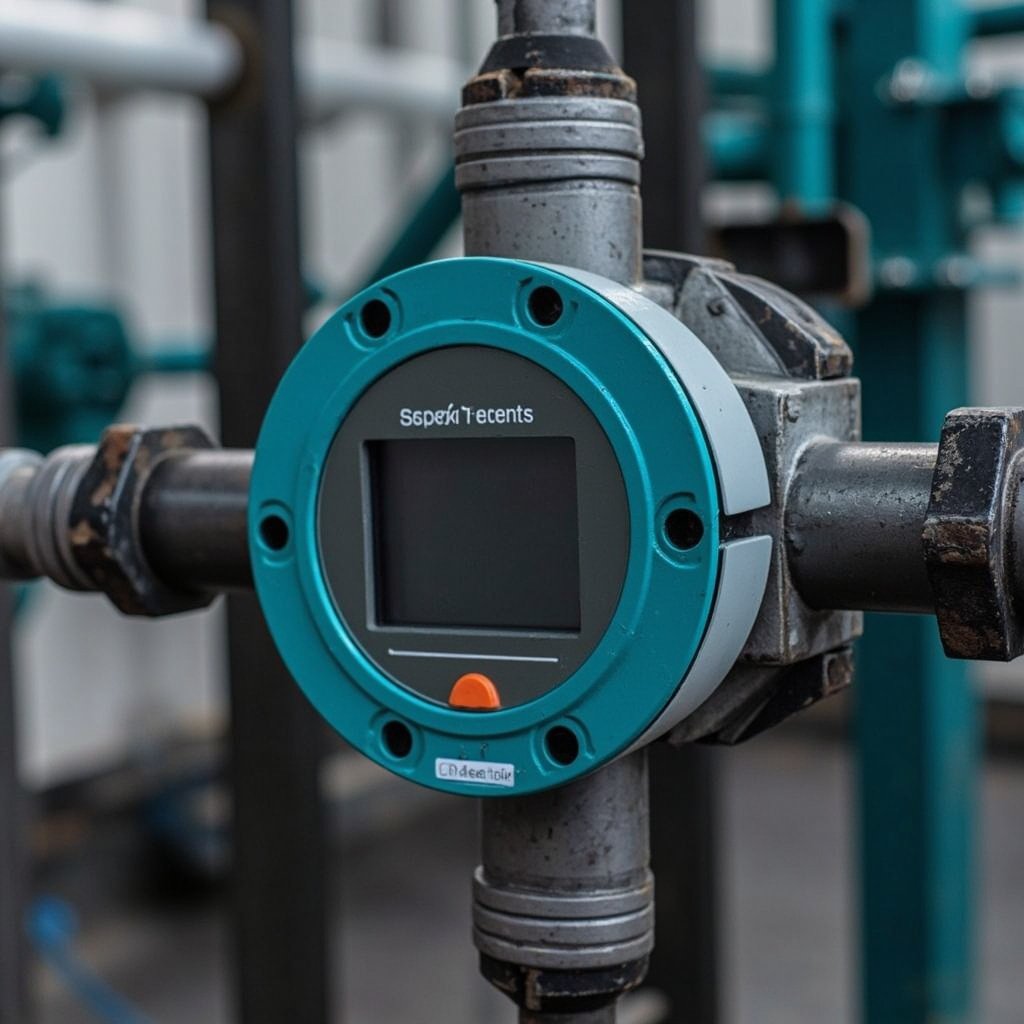
Conductivity and pH Measurement in Water Treatment: Endress+Hauser CLS19-B1A1A Sensor, FTW325-A2B1A Transmitter, and CPS12E Electrode Calibration


Conductivity and pH Measurement in Water Treatment: Endress+Hauser CLS19-B1A1A Sensor, FTW325-A2B1A Transmitter, and CPS12E Electrode Calibration
Reliable water analysis depends on more than placing a sensor in a vessel. Conductivity measurements must distinguish the electrical behavior of the sample from the effects of temperature, cell geometry, and sample conditioning. pH measurements must combine a responsive glass membrane with a stable reference, a functioning junction, and accurate temperature compensation. Spare-part selection is equally important: the correct catalogue number does not by itself confirm that a replacement has the required process connection, cable arrangement, measurement range, or cell construction. The Endress+Hauser CLS19-B1A1A conductivity sensor and Endress+Hauser FTW325-A2B1A signal converter provide the sensing and signal-processing path for conductivity, while the listed pH electrodes cover different calibration and installation needs. The following guidance explains how these measurements behave, where errors originate, and what should be checked before a replacement is ordered or returned to service.
Three Different Numbers Called Conductivity
Conductivity, often abbreviated as kappa, is the reciprocal of resistivity. It describes how readily the sample conducts electricity, but several forms of the result answer different operational questions. Specific conductivity is a temperature-referenced value; it should only be reported when the reference temperature is stated, commonly 25 C. Residual conductivity is the conductivity remaining after the sample has been driven past the carbonate equilibrium. This definition makes residual conductivity valuable in boiler-feed and steam-purity work, where the measurement focuses on dissolved material left after relevant chemical equilibria have been removed.
Cation conductivity is different again. It describes the conductivity of a sample after it has passed through a hydrogen-form cation exchanger. The exchanger removes ammonia and amine interference, allowing the measurement to reflect the remaining ionic content more effectively. These three numbers are not alternative labels for one reading. Specific conductivity describes a temperature-normalized electrical property, residual conductivity describes a chemically prepared sample, and cation conductivity describes the result after selective ion exchange. Interchanging them can produce a technically valid measurement that is operationally meaningless.
The order code carries the process connection, cable, and cell details, so the manufacturer data sheet must be read before a spare is ordered. Our listings identify the relevant catalogue items and functions without reproducing a complete specification table. That distinction matters particularly for conductivity, because a cell constant, electrode material, cable length, and process connection can affect whether a replacement is electrically and mechanically interchangeable. Comparison data should therefore use the same sample, temperature compensation, and reporting definition on both instruments.
Two-Electrode Cells, Four-Electrode Cells, and Toroidal Cells
Cell construction determines how conductivity is measured and which errors become important. A two-electrode cell applies the excitation and measures the resulting response through the same electrodes. This arrangement is generally suitable for moderate to high conductivity. At low conductivity, polarization at the electrodes becomes significant, and the instrument may read below the true value because the measured response no longer represents the sample accurately.
A four-electrode cell uses one electrode pair to drive current and a separate pair to sense voltage. Because the sense electrodes carry almost no current, their polarization is greatly reduced. This extends the useful range toward lower conductivity and limits a common source of measurement error. It also changes the installation and maintenance implications, so the cell geometry and cell constant cannot be treated as interchangeable details.
Toroidal, or electrodeless inductive, cells have no metal electrodes in the sample. They are attractive in fouling or abrasive service because there is no electrode surface to coat or erode. Their limitation is the need for sufficient sample conductivity to support electromagnetic coupling. Very low-conductivity water may not couple reliably. These technologies describe general measurement principles; they do not establish which one is installed in a listed spare. The exact order code and manufacturer documentation must be checked before assuming cell type, constant, or suitability.
Cell Constant and the Arithmetic of the Measurement
The cell constant converts the electrical response of the complete cell into the conductivity of the sample. If G is measured conductance in siemens and theta is the cell constant in inverse centimetres, then:
kappa = G × theta
The result has units of S/cm and is commonly reported in uS/cm or mS/cm. The constant is not simply a convenience multiplier. It represents the geometry and electrode arrangement of the cell, and a mismatched or incorrectly configured constant scales every result.
Low-conductivity work requires a well-defined constant and careful control of the sample path. Air bubbles can change the effective electrode area or interrupt the electrical path. Carbon dioxide absorption also matters: a measured value in air-saturated pure water climbs because the water absorbs carbon dioxide and becomes more conductive. A closed flow cell and short sample lines are therefore part of the measurement system rather than optional installation accessories.
The most useful cell constant depends on the working range. A cell intended for higher conductivity may have insufficient sensitivity in very pure water, while a low-range cell may be unsuitable where the expected conductivity is much higher. No absolute cell constant should be assigned to the listed part from its catalogue name alone. Read the data sheet, confirm the configured constant, and perform a verification check with a standard solution appropriate to the operating range. A standard near the top of the range may not adequately validate accuracy at the low end.
Temperature Compensation Is a Model You Choose
Conductivity changes strongly with temperature because the mobility of dissolved ions changes as the sample temperature changes. A transmitter can apply linear compensation using a reference temperature and an adjustable coefficient, apply a nonlinear natural curve, or provide no compensation. These choices produce different displayed values from the same sample, so two instruments cannot be compared meaningfully unless their compensation settings are equivalent.
For natural waters, the temperature coefficient is of the order of a few percent per kelvin, but the actual value depends on the water matrix. Dissolved species, concentration, and composition can all affect the relationship. The coefficient should therefore be selected for the actual sample rather than accepted blindly from a default setting.
A compensated result is a calculated representation of conductivity at the selected reference condition. It is not the true conductivity at the sample temperature. That distinction is important in process control, reporting, and troubleshooting. A sudden displayed change after a compensation adjustment may be a configuration change rather than a physical change in the water.
The FTW325-A2B1A is listed as a conductivity signal converter, while the CLS19-B1A1A is listed as a conductivity sensor. The listing function alone does not state the available compensation modes, settings, or supported cell constant. The manufacturer data sheet must be consulted to confirm them. During commissioning, document the reference temperature, compensation method, coefficient, cell constant, and units. Those records create the context needed to interpret a later drift or an apparently inconsistent comparison between plants.
Installing the Sensor: Flow, Fouling, and Sample Lines
Installation quality determines whether the sensor sees the intended sample. A fixed flow cell with a steady, representative flow generally provides more repeatable results than a dip measurement in an open basin. The sample should reach the electrodes without entrained air, stagnant zones, or deposits. Air pockets on the electrode surfaces can cause the reading to wander even when the transmitter and electronics are operating correctly.
Backpressure and a small continuous flow help keep the sample representative where changes in temperature or pressure would otherwise cause flashing or bubble formation. The arrangement should also allow calibration without draining the process line. A sensor that is accessible only after the line is emptied introduces avoidable service risk and may be contaminated during shutdown and restart.
Fouling requires a cell that can be cleaned without breaking the process connection. The appropriate cleaning method depends on the electrode material, cell construction, deposits, and process chemistry; therefore, the manufacturer instructions are essential. A strong cleaning action suitable for one design may damage another. Inspection intervals should reflect the actual fouling rate rather than a generic schedule.
Where the sample is hot, use a cooled sample or an assembly specifically designed for the documented temperature and pressure conditions. The choice must be supported by the data sheet and installation documentation. Confirm the process connection, cable requirements, flow direction, and permitted sample conditions before ordering. For conductivity spare-part identification, also verify the cell constant and whether the existing transmitter expects the same sensor technology and signal arrangement.
pH Electrodes: Slope, Junction, and What Age Looks Like
A pH electrode develops a membrane potential related to hydrogen-ion activity. At 25 C, the response is approximately 59.16 mV per pH unit, and that value scales with absolute temperature. An electrode without temperature measurement will therefore drift when the sample temperature changes, even if the glass membrane itself remains healthy.
Calibration describes the response with two principal outputs. Slope is expressed as a percentage of the theoretical response and is the primary indicator of electrode aging. Offset describes asymmetry and provides information about the membrane surface and reference system. Recording both during every calibration makes gradual deterioration visible. A slope that is still acceptable can conceal a growing offset, while either output can be affected by unsuitable handling.
The reference path must remain stable. Reference electrolyte level, gel reservoir, junction design, and leakage current path all affect the result. A poisoned or dried junction produces a slow, noisy response that may still return a plausible slope during calibration. Ceramic junctions, fibre rings, and open junctions have different contamination and resistance characteristics.
High-alkali samples can produce an alkali error at high pH. Low-ionic-strength samples make the reading more sensitive to grounding, cable length, and leakage paths. The pH channel is a high-impedance millivolt source, so a floating measuring circuit, long unshielded run, or second ground point through a conductive pipe can produce wandering that is incorrectly blamed on the electrode. The same grounding discipline discussed in the site’s electromagnetic flow meter installation and grounding article applies here: an unfilled pipe and missing ground ring create the identical class of electrical fault.
The Endress+Hauser CPS12E pH electrode and Endress+Hauser CPS11-1AT2GSA are listed as pH electrodes. Their order codes carry process connection, cable, and cell details, so the data sheet must be read before a spare is ordered.
The Hamilton EasyFerm Plus PHI VP 120 Pt100 238633-1111 is listed as a pH electrode with an integral Pt100 temperature element, as indicated by its name. This provides the practical basis for automatic temperature compensation because the temperature is measured at the electrode. A thermowell or a probe installed in a flow cell can behave differently from a bench measurement. For installation details, including the thermowell and current-output arrangement, consult the industrial temperature sensor installation article.
A disciplined calibration routine includes the following:
- Use a two-point or three-point calibration with fresh, traceable buffers spanning the working pH range.
- Use buffers at a temperature close to the sample; a certified buffer value is temperature-dependent and must be taken from the buffer’s own certificate.
- Rinse between measurements with deionised water and blot the glass rather than wiping it.
- Record slope and offset at every calibration to identify aging trends.
- Replace the electrode when the recorded trend shows that its performance is no longer reliable.
- Verify a conductivity cell with a certified standard solution matched to the working range, not simply the highest available value.
| Measurement | What the sensor sees | The setting that changes the answer | The drift signature to watch |
|---|---|---|---|
| CLS19 conductivity sensor with FTW325 transmitter | The sample’s electrical response, converted using the cell geometry | Cell constant, temperature compensation, reference temperature, and coefficient | A slowly changing value with air, fouling, CO2 uptake, or inconsistent compensation |
| Low-conductivity or residual conductivity measurement | Very weak ionic response or the conductivity remaining after carbonate equilibrium | Closed-cell conditioning, short lines, correct cell constant, and defined temperature reference | Rising readings from carbon dioxide or unstable baseline from bubbles |
| CPS12E or CPS11 pH electrode | Glass-membrane potential relative to the reference | Buffer range, calibration points, slope, offset, and temperature compensation | Falling slope, increasing offset, slow response, or noisy junction behavior |
| Hamilton EasyFerm Plus electrode with integral Pt100 | pH response with local sample-temperature measurement | Temperature compensation and calibration method at the actual operating temperature | Drift when sample temperature changes or grounding introduces electrical noise |
Frequently Asked Questions
Does a compensated conductivity value equal the conductivity at the sample temperature?
No. Compensation calculates a value at a selected reference condition. If no compensation is selected, the displayed result represents the sample-temperature condition within the limits of the measurement system. The transmitter documentation should be consulted for its supported modes and behavior.
Why does pure-water conductivity increase when the sample is exposed to air?
Pure water absorbs carbon dioxide from the air, forming additional dissolved ions and increasing conductivity. Closed flow cells and short sample paths reduce this effect. The cell design and manufacturer guidance determine how the installation should be conditioned.
Can a pH electrode with an acceptable slope still need replacement?
Yes. A plausible slope does not prove that the reference system or junction is healthy. A dried, poisoned, or contaminated junction can cause slow and noisy response. Offset, response time, physical condition, and calibration trends must be reviewed together.
Why should pH buffer values not be copied blindly between temperatures?
The certified pH value of a buffer changes with temperature. Its own certificate provides the applicable value. Buffers should also be fresh and used across a range that represents the process rather than only one convenient point.
What must be verified before ordering a replacement electrode?
Confirm the full order code, process connection, cable arrangement, electrical details, permitted operating conditions, and required accessories. Our listings provide the part identifiers, while the manufacturer data sheet remains the authority for specifications and installation constraints.
Conductivity and pH instruments can produce convincing readings even when the sample system is introducing the error. Correct cell geometry, temperature treatment, flow conditioning, reference stability, grounding, and calibration records are what make the displayed value dependable. Treat every replacement as a complete measurement-system check rather than a simple like-for-like substitution.
Our team can cross-reference the exact part number and lead time against your application requirements. Contact us with the existing instrument identification, process connection, sample conditions, and measurement range so we can help you confirm the appropriate spare before ordering.