

5G Industrial Camera Applications: Revolutionizing Smart Manufacturing in 2024

Comments Off on 5G Industrial Camera Applications: Revolutionizing Smart Manufacturing in 2024
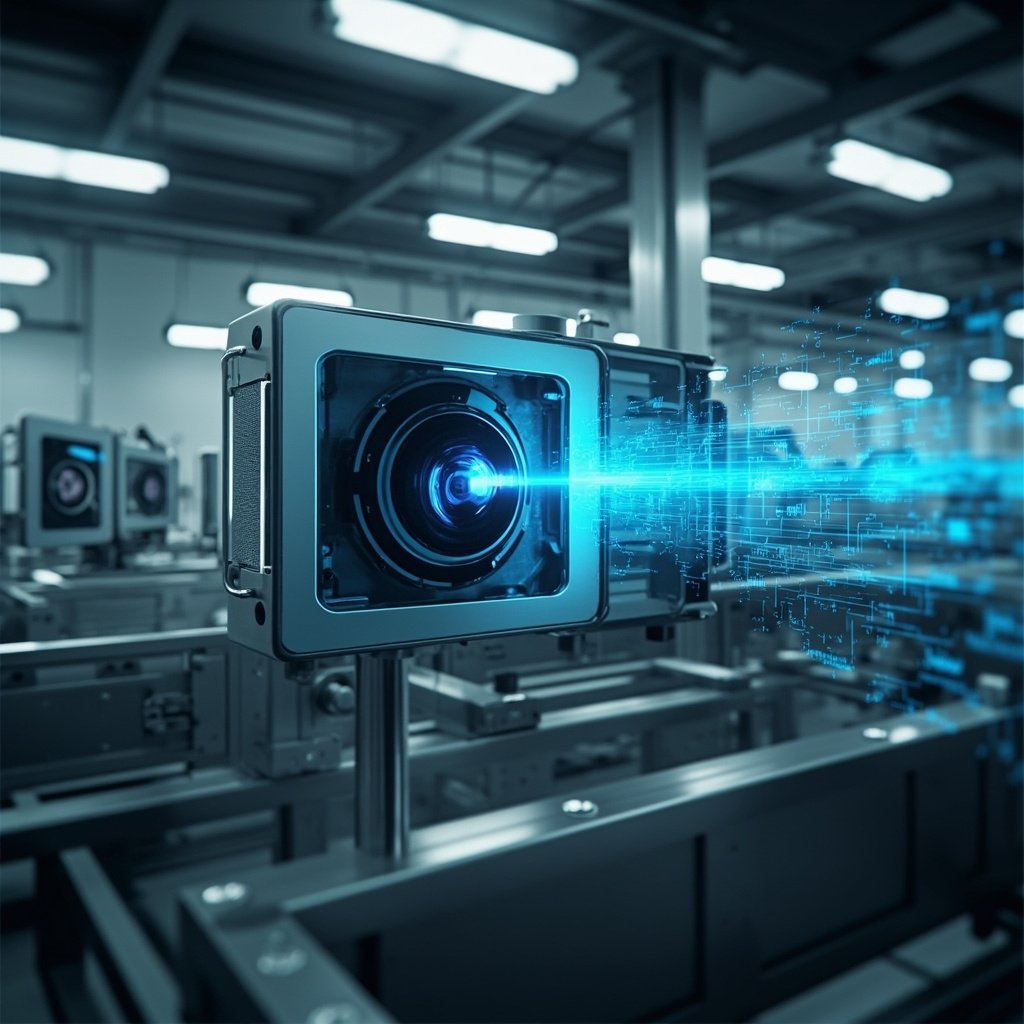
The rapid evolution of 5G technology has transformed the landscape of industrial automation, giving rise to a new generation of smart devices that combine high-speed wireless connectivity with advanced imaging capabilities. Among these innovations, the 5G industrial camera stands out as a cornerstone of modern Industry 4.0 infrastructure. These cameras integrate ultra-fast mobile networks, artificial intelligence, and high-resolution sensors to deliver real-time visual data across factory floors, remote sites, and mission-critical environments. As manufacturers and enterprises seek more flexible, scalable, and intelligent monitoring solutions, 5G industrial cameras are becoming indispensable tools for quality control, predictive maintenance, and process optimization.
What Is a 5G Industrial Camera?
A 5G industrial camera is a ruggedized imaging device equipped with fifth-generation mobile network modules that enable wireless transmission of high-bandwidth visual data in real time. Unlike traditional wired industrial cameras, these devices eliminate the need for extensive Ethernet or fiber cabling, allowing for rapid deployment in dynamic production environments. They typically feature onboard processors capable of running AI-based image recognition, edge analytics, and machine vision algorithms directly on the device.
The combination of 5G’s ultra-low latency (as low as 1 millisecond), massive device connectivity, and peak data rates exceeding 10 Gbps makes these cameras ideal for time-sensitive applications such as automated defect detection, robotic guidance, and remote equipment inspection. By offloading heavy image processing to the edge or cloud, 5G industrial cameras reduce computational bottlenecks and enable smarter decision-making at the network’s edge.
Key Features and Benefits
5G industrial cameras offer a wide range of technical advantages that make them superior to conventional vision systems. Below are the most notable features:
- Ultra-Low Latency Communication: Enables near-instantaneous data transfer, critical for real-time quality inspection and robotic synchronization.
- High-Resolution Imaging: Supports 4K, 8K, and even higher megapixel sensors for capturing fine details in manufacturing processes.
- Wireless Flexibility: Removes the constraints of physical cabling, allowing installation in hazardous, mobile, or hard-to-reach locations.
- Edge AI Processing: Performs object detection, classification, and anomaly recognition on-device, reducing bandwidth usage.
- Ruggedized Design: Built to withstand extreme temperatures, dust, vibration, and moisture, meeting IP67 or IP68 protection standards.
- Network Slicing Support: Allows dedicated virtual networks for mission-critical vision applications with guaranteed quality of service.
Technical Specifications Comparison
The following table compares typical specifications of traditional industrial cameras versus 5G-enabled industrial cameras:
| Parameter | Traditional Industrial Camera | 5G Industrial Camera |
|---|---|---|
| Connectivity | Ethernet / GigE / USB | 5G NR / Wi-Fi 6 / Bluetooth |
| Latency | 5–20 ms | < 1 ms |
| Data Rate | 1–10 Gbps | Up to 20 Gbps (mmWave) |
| Installation Flexibility | Limited by cabling | High mobility, wireless |
| Onboard AI | Optional / External | Built-in NPU / GPU |
| Scalability | Complex wiring infrastructure | Plug-and-play, scalable |
Core Application Areas
5G industrial cameras are deployed across a broad spectrum of industries. The following list highlights the most prominent application domains:
- Smart Manufacturing: Real-time defect detection on assembly lines, automated optical inspection (AOI), and robotic vision guidance.
- Automotive Industry: Monitoring welding quality, paint consistency, and component assembly with sub-millimeter precision.
- Logistics and Warehousing: Barcode scanning, package dimensioning, and autonomous vehicle navigation in large distribution centers.
- Energy and Utilities: Remote inspection of power lines, wind turbines, oil rigs, and solar farms in hazardous or isolated locations.
- Pharmaceutical and Food: Ensuring hygiene compliance, label verification, and contamination detection in regulated production lines.
- Public Safety and Surveillance: Crowd monitoring, perimeter security, and incident response in smart city infrastructure.
Industry-Specific Use Cases
In a typical smart factory, 5G industrial cameras are mounted on collaborative robots (cobots) to perform high-speed visual inspections. For example, a semiconductor manufacturer may use these cameras to detect microscopic defects on wafer surfaces, transmitting high-resolution images to AI servers within milliseconds for instant analysis. Similarly, in automotive production, 5G cameras guide robotic arms during precision welding and paint application, ensuring consistent quality across thousands of vehicles per day.
In the energy sector, 5G-enabled drones equipped with industrial cameras inspect vast stretches of power infrastructure, transmitting thermal and visual data to control centers in real time. This dramatically reduces inspection time, improves worker safety, and enables predictive maintenance that prevents costly equipment failures. Meanwhile, in logistics hubs, 5G cameras track goods movement, identify damaged packaging, and optimize storage layouts through continuous video analytics.
Integration with Industrial IoT (IIoT)
The true power of 5G industrial cameras emerges when they are integrated into a broader Industrial Internet of Things (IIoT) ecosystem. These cameras act as intelligent visual nodes, feeding data into centralized platforms that combine information from sensors, actuators, and enterprise systems. Through standardized protocols such as MQTT, OPC UA, and REST APIs, 5G cameras seamlessly communicate with Manufacturing Execution Systems (MES) and Enterprise Resource Planning (ERP) software.
This integration enables closed-loop control systems where camera-detected anomalies automatically trigger corrective actions, such as halting a production line or redirecting defective products for rework. The result is a more responsive, adaptive, and self-optimizing manufacturing environment that continuously improves through machine learning.
⚠️ Implementation Warning: Before deploying 5G industrial cameras, verify that your facility has adequate 5G coverage, especially in indoor or shielded production areas. Signal attenuation from metal structures, machinery, and concrete walls can severely impact performance. Consider using 5G small cells, distributed antenna systems (DAS), or hybrid 5G/Wi-Fi 6 solutions to ensure reliable connectivity in challenging industrial environments.
Challenges and Considerations
Despite their many advantages, 5G industrial cameras come with certain challenges that organizations must address. Initial deployment costs can be significant, particularly when upgrading existing facilities to support 5G infrastructure. Cybersecurity is another major concern, as wireless transmission of sensitive production data requires robust encryption, authentication, and intrusion detection mechanisms. Additionally, integration with legacy systems may require custom interfaces and middleware, increasing complexity during the transition period.
To mitigate these issues, businesses should conduct thorough site surveys, partner with experienced system integrators, and adopt a phased implementation strategy. Training personnel on the new technology stack and establishing clear data governance policies are also essential for long-term success.
Future Trends and Outlook
The future of 5G industrial cameras is deeply intertwined with advances in edge computing, AI, and next-generation connectivity. As 5G standalone (SA) networks become more widespread, expect to see even lower latencies, greater device density, and enhanced network slicing capabilities tailored specifically for vision applications. The convergence of 5G with technologies such as digital twins, augmented reality (AR), and autonomous robotics will unlock new possibilities for remote operations, immersive training, and fully autonomous production facilities.
Moreover, the rollout of 5G-Advanced and early 6G research promises to further enhance imaging capabilities through terahertz communications, AI-native air interfaces, and ultra-reliable low-latency communication (URLLC) enhancements. These developments will solidify 5G industrial cameras as foundational components of the intelligent, connected factories of tomorrow.
Conclusion
5G industrial cameras represent a transformative leap in machine vision technology, offering unmatched speed, flexibility, and intelligence for modern industrial environments. By enabling real-time visual analytics, wireless deployment, and seamless IIoT integration, these devices empower organizations to achieve higher productivity, superior product quality, and enhanced operational safety. As the technology matures and 5G networks expand globally, businesses that strategically adopt 5G industrial cameras will be well-positioned to lead the next wave of industrial innovation and maintain a competitive edge in an increasingly digital marketplace.