

Linear Stepper Applications: A Comprehensive Guide to Uses and Benefits

Comments Off on Linear Stepper Applications: A Comprehensive Guide to Uses and Benefits
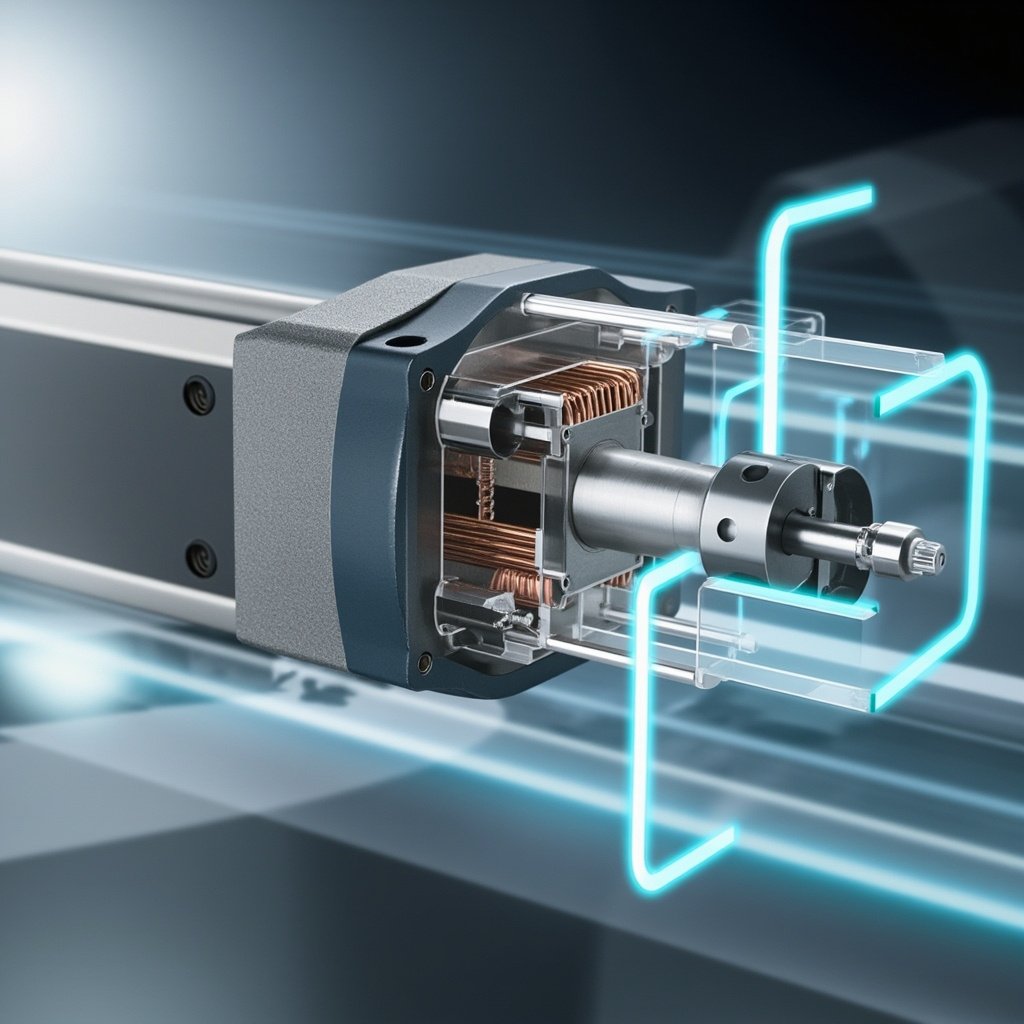
Linear stepper motors have revolutionized precision motion control across countless industries, offering unmatched accuracy, repeatability, and cost-effectiveness. Unlike traditional rotary stepper motors that require separate mechanical conversion systems, linear steppers convert electrical pulses directly into linear displacement, eliminating backlash and reducing mechanical complexity. This comprehensive guide explores the diverse linear stepper applications shaping modern manufacturing, automation, and medical technology.
What Is a Linear Stepper Motor?
A linear stepper motor is a specialized electromechanical device that produces straight-line motion without the need for rotary-to-linear conversion components such as lead screws, ball screws, or belt drives. The device consists of a stationary forcer (stator) and a passive or active platen (mover) that moves along a straight axis in precise increments. Each electrical pulse sent to the motor produces a controlled, repeatable step of motion, typically ranging from 0.001 mm to 0.05 mm per step.
Linear steppers are categorized into three primary types:
- Variable Reluctance (VR) Linear Steppers – Known for high speed and simple construction, ideal for low-load applications.
- Permanent Magnet (PM) Linear Steppers – Offer higher holding force and excellent damping characteristics.
- Hybrid Linear Steppers – Combine the benefits of both VR and PM designs, delivering high resolution, torque, and precision.
How Linear Steppers Work: Operating Principles
The operating principle of a linear stepper is based on the interaction between magnetic fields generated by energized coils in the forcer and either permanent magnets or toothed iron in the platen. When current is applied sequentially to the phase windings, the resulting electromagnetic force pulls the platen along the magnetic track in discrete increments. Modern closed-loop linear steppers incorporate linear encoders to provide real-time position feedback, eliminating missed steps and improving dynamic performance.
Top Industrial Applications of Linear Steppers
1. CNC Machining and Milling Systems
In CNC routers, lathes, and plasma cutters, linear stepper motors drive the X, Y, and Z axes directly, providing the high stiffness and precision required for cutting wood, plastics, aluminum, and soft metals. Their zero-backlash design ensures accurate contour following and excellent surface finish quality.
2. 3D Printing and Additive Manufacturing
Linear steppers are the backbone of consumer and prosumer Fused Deposition Modeling (FDM) 3D printers. They control the precise movement of print heads and build platforms, enabling layer-by-layer fabrication with resolutions down to 50 microns. They are also used in resin-based printers for Z-axis vertical movement.
3. Medical and Laboratory Equipment
The medical industry relies heavily on linear steppers for applications requiring sterile, vibration-free, and silent operation:
- Infusion pumps for precise drug delivery
- Diagnostic analyzers for sample positioning
- DNA sequencing equipment for nanoliter fluid handling
- CT and MRI patient positioning tables
- Surgical robots and microscope stages
4. Semiconductor and Electronics Manufacturing
In semiconductor fabrication, wafer inspection, photolithography stages, and pick-and-place machines require sub-micron positioning accuracy. Linear steppers with integrated encoders deliver the cleanroom-compatible, oil-free motion essential for these sensitive processes.
5. Robotics and Automation
Linear stepper actuators are increasingly used in collaborative robots (cobots), SCARA arms, and gantry systems. Their compact form factor, high force density, and ability to operate in tight spaces make them ideal for assembly line automation, packaging machinery, and warehouse logistics.
6. Textile and Printing Industries
High-speed digital printers, embroidery machines, and fabric cutting systems use linear steppers to control carriage movement and feed mechanisms. Their repeatable accuracy ensures consistent print registration and pattern alignment over millions of cycles.
Linear Stepper vs. Rotary Stepper: Key Differences
Understanding the differences between linear and rotary stepper configurations is critical when selecting the right motion solution for your project. The table below summarizes the most important comparison points:
| Parameter | Linear Stepper | Rotary Stepper |
|---|---|---|
| Output Motion | Direct linear motion | Rotational motion (requires conversion) |
| Backlash | None | Present (depending on drive train) |
| Mechanical Complexity | Low | High (needs lead screws, couplings) |
| Maintenance | Minimal | Periodic lubrication required |
| Stroke Length | Scalable (platen can be extended) | Limited by screw length |
| Typical Cost | Higher initial, lower lifetime | Lower initial, higher lifetime |
Common Technical Specifications
When evaluating linear stepper motors for a particular use case, engineers typically review the following key specifications:
| Specification | Typical Range | Application Impact |
|---|---|---|
| Step Resolution | 1.0 µm – 50 µm | Determines positioning precision |
| Peak Force | 5 N – 2000 N | Affects load capacity |
| Max Velocity |
Back to list
|