

Linear Motor Module Selection: A Complete Guide for Optimal Performance

Comments Off on Linear Motor Module Selection: A Complete Guide for Optimal Performance
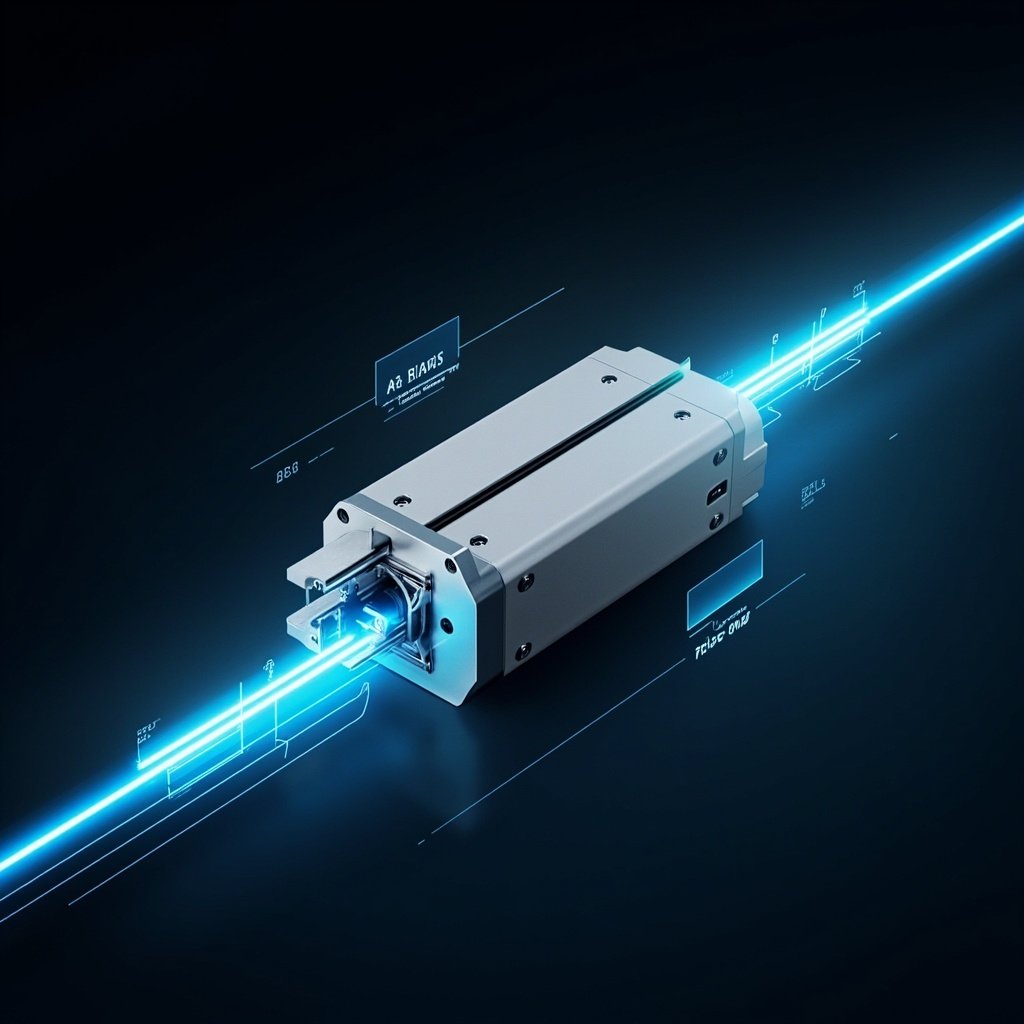
Selecting the right linear motor module is a critical decision that directly impacts the performance, precision, and longevity of your automation system. Whether you’re designing a high-speed pick-and-place machine, a semiconductor inspection system, or a CNC machining center, the linear motor module you choose will determine throughput, accuracy, and total cost of ownership. This comprehensive guide walks you through every essential consideration, from technical specifications to application-specific requirements, helping engineers and procurement specialists make informed decisions.
What Is a Linear Motor Module?
A linear motor module is a complete mechatronic assembly that combines a linear motor (either iron-core or ironless) with a guidance system, bearings, position feedback, and protective housing. Unlike traditional ball screw or belt-driven systems, linear motor modules deliver direct-drive motion, eliminating mechanical transmission parts. This results in higher acceleration, superior positioning accuracy, zero backlash, and reduced maintenance requirements.
These modules are widely used in industries where precision, speed, and repeatability are non-negotiable, including electronics manufacturing, medical device assembly, optical inspection, and advanced robotics.
Key Factors in Linear Motor Module Selection
Choosing the optimal module requires balancing multiple engineering parameters. Below are the most important factors to evaluate:
- Stroke Length — The total travel distance required by your application must match the module’s effective stroke plus safety margins.
- Force and Payload Capacity — Continuous force, peak force, and payload mass determine whether the motor can accelerate the load without overheating.
- Acceleration and Velocity — High-dynamic applications require modules with high force-to-mass ratios and robust thermal management.
- Positioning Accuracy and Repeatability — Defined by encoder resolution, bearing precision, and straightness of the guidance system.
- Environmental Conditions — Cleanroom, vacuum, dust, or washdown environments demand specific sealing and material choices.
- Integration and Footprint — Compact modules simplify mechanical integration and reduce machine footprint.
Comparison of Common Linear Motor Module Types
The table below summarizes the three most prevalent configurations to support your linear motor module selection process:
| Module Type | Typical Force Range | Max Acceleration | Best Use Case | Cost Level |
|---|---|---|---|---|
| Iron-Core Linear Module | 100 – 3000 N | Up to 5 g | Heavy-payload CNC, large automation | Medium |
| Ironless Linear Module | 10 – 500 N | Up to 10 g | High-speed pick-and-place, semiconductor | High |
| Tubular Linear Module | 20 – 800 N | Up to 4 g | Compact automation, medical devices | Low to Medium |
Application-Driven Selection Criteria
Different industries prioritize different performance attributes. Below is a practical breakdown:
- Semiconductor Manufacturing: Ultra-clean operation, nanometer-level precision, and vacuum compatibility are mandatory. Ironless modules with non-outgassing materials are preferred.
- Packaging Machinery: High cycle rates and rapid acceleration dominate. Ironless modules with low moving mass deliver optimal throughput.
- Machine Tools: High force density and rigidity matter most. Iron-core modules with precision linear guides are the industry standard.
- Medical and Laboratory Automation: Smooth motion, low noise, and cleanroom-rated enclosures are essential for diagnostic and analytical equipment.
- Robotics and Gantries: Multi-axis synchronization demands modules with matched thermal expansion and integrated cable management.
⚠ Engineering Tip: Always oversize your linear motor module by at least 20% in continuous force rating relative to your calculated RMS load. Operating too close to the rated limit dramatically shortens coil life and can cause thermal saturation during peak duty cycles.
Technical Specifications to Verify Before Purchase
Before finalizing your linear motor module selection, request the following data points from the manufacturer and confirm they meet your motion profile:
- Continuous current and force at the specified ambient temperature.
- Peak force and peak current with defined duty cycle limits.
- Thermal resistance between coil and housing.
- Encoder resolution (typically 0.1 µm to 1 µm for high-end systems).
- Straightness and flatness tolerances per meter of travel.
- Repeatability under bidirectional motion (hysteresis check).
- Protection class (IP rating) and operating temperature range.
Common Selection Mistakes to Avoid
Even experienced engineers can overlook critical details. Watch out for these frequent pitfalls:
- Choosing a module based on peak force only rather than RMS thermal load.
- Ignoring cable management and bending radius in long-stroke applications.
- Underestimating the impact of mounting surface flatness on overall accuracy.
- Selecting the wrong linear guide type (rolling element vs. crossed roller) for the required load capacity.
- Failing to verify compatibility with the motion controller and drive electronics.
Linear Motor Module Selection Checklist
Use this condensed checklist to streamline your evaluation process:
- Define stroke, payload, and required acceleration profile.
- Calculate continuous RMS force and peak force.
- Determine environmental and cleanliness requirements.
- Select iron-core or ironless motor technology accordingly.
- Verify encoder resolution and feedback compatibility.
- Confirm drive and controller interoperability.
- Request long-term reliability and MTBF data from the supplier.
Maintenance and Lifespan Considerations
A well-selected linear motor module typically delivers service life exceeding 50,000 hours with minimal intervention. Routine maintenance includes inspecting the linear guides for wear, verifying encoder signal integrity, cleaning cooling vents, and monitoring motor winding resistance. Because there are no belts, ball screws, or gears, the total cost of ownership is often lower than conventional drive systems over a five- to ten-year operational horizon.
In conclusion, linear motor module selection is a multi-dimensional engineering task that requires balancing mechanical, electrical, and environmental factors. By systematically evaluating force requirements, motion dynamics, accuracy demands, and integration constraints — and by avoiding common oversizing or undersizing errors — you can secure a module that delivers exceptional performance, long service life, and outstanding return on investment for your automation project.