

Power requirements for industrial automation systems

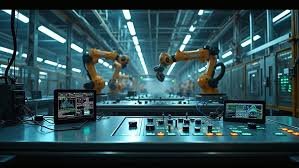
Power Requirements for Modern Industrial Automation Systems
In the industrial landscape, power is more than just "electricity"—it is the lifeblood of precision. Modern automation systems, consisting of PLCs, HMIs, and sensitive sensors, have rigorous power requirements that differ significantly from standard commercial electrical loads. Ensuring a stable and "clean" power supply is the first step toward preventing costly downtime.
1. Voltage Standards and Distribution
While the heavy machinery in a plant runs on high-voltage AC (208V, 480V, or 600V), the control layer almost exclusively operates on 24V DC. This low-voltage standard enhances safety and reduces electromagnetic interference (EMI) for control signals.
Switched-Mode Power Supplies (SMPS)
Most automation systems utilize SMPS to convert line AC into stable 24V DC. These units must be sized to handle "inrush current"—the temporary spike in demand that occurs when motors or solenoids first activate.
2. Power Quality and Signal Integrity
Industrial environments are "electrically noisy." Variable Frequency Drives (VFDs) and large motors can create harmonic distortion and voltage sags. To protect sensitive electronics, automation systems require:
- Isolation Transformers: To decouple the control circuit from the main power transients.
- Surge Protection Devices (SPD): To guard against lightning strikes and heavy load switching.
- Line Filters: To remove high-frequency noise that could corrupt data transmitted via industrial Ethernet or fieldbus cables.
For engineers designing these robust systems, sourcing high-performance components is critical. For a wide selection of industrial-grade power modules and electrical hardware, visit ai-electrical.com to explore solutions for specialized automation environments.
3. Redundancy and Backup (UPS)
In a fully automated facility, even a 100ms power dip can crash a PLC, causing a loss of process data and requiring a manual system reboot. Industrial Uninterruptible Power Supplies (UPS) and redundant power supply modules (using "ORing" diodes) ensure that if one power source fails, the system switches to a backup without a millisecond of interruption.
Conclusion
The success of an industrial automation project is built upon its power foundation. By adhering to strict 24V DC standards, mitigating EMI through proper filtering, and implementing redundancy, facilities can ensure maximum uptime. For premium electrical supplies, circuit protection, and professional automation hardware, trust ai-electrical.com to provide the components you need for a resilient system.