

VFD Star-Delta Start Connection: Complete Guide

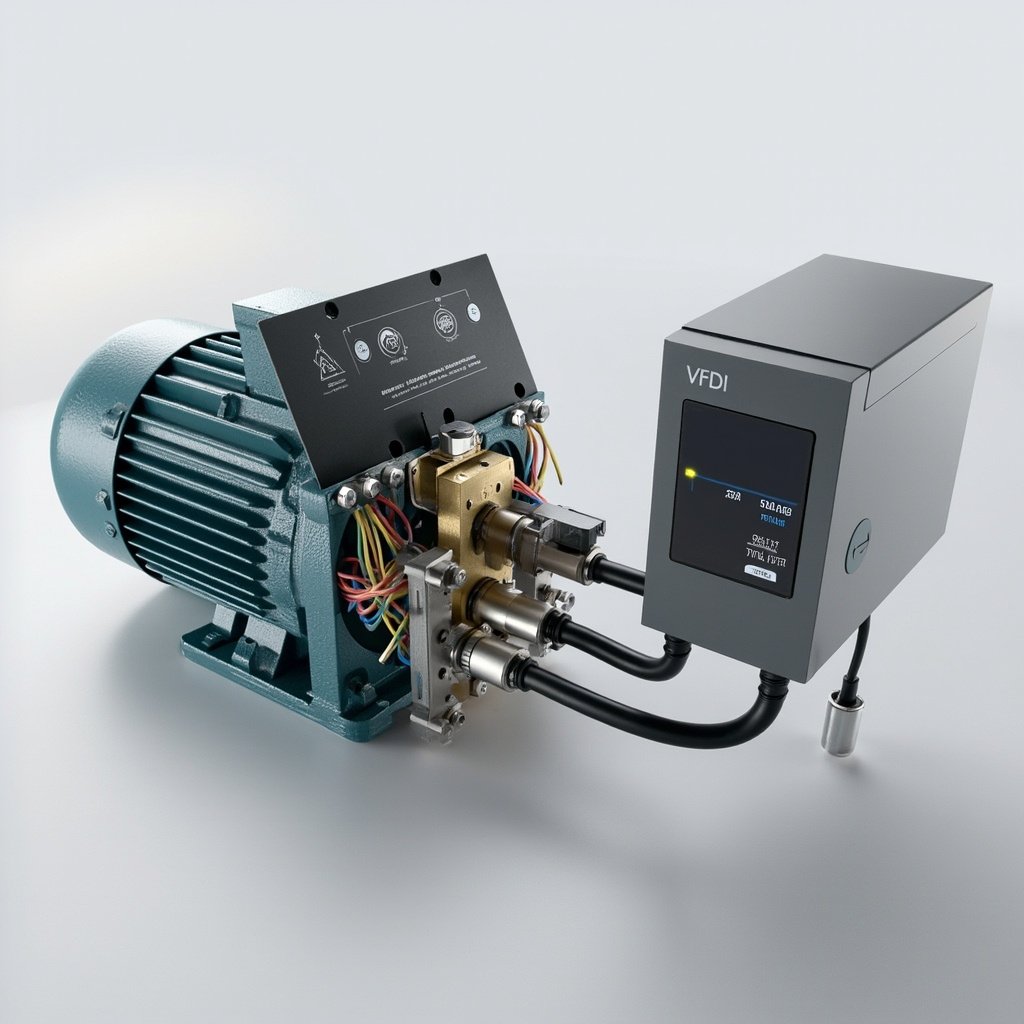
A VFD Star-Delta Start Connection represents a sophisticated motor starting technique that combines the soft-starting benefits of a Variable Frequency Drive (VFD) with the proven reliability of the traditional star-delta starting method. This hybrid configuration is widely adopted in modern industrial environments where reducing inrush current, mechanical stress, and energy consumption during motor startup are critical operational priorities. By intelligently switching motor windings between star (Y) and delta (Δ) configurations, this method enables smooth acceleration, extends equipment lifespan, and lowers overall operating costs. Whether you are an electrical engineer, maintenance technician, or automation specialist, understanding the VFD star-delta start connection is essential for optimizing three-phase induction motor performance in demanding applications.
Understanding the VFD Star-Delta Start Concept
A Variable Frequency Drive (VFD), also known as an adjustable frequency drive or inverter, is an electronic controller that varies the frequency and voltage supplied to an electric motor. When integrated with a star-delta starting circuit, the VFD acts as the central intelligence controlling the transition between two winding configurations. In star connection, the motor windings are arranged so that each phase receives voltage reduced by a factor of √3 (approximately 58% of line voltage), resulting in starting current reduced to one-third of direct-on-line (DOL) values. Once the motor accelerates to roughly 70–80% of its rated speed, the VFD commands contactors to switch the windings into delta configuration, delivering full line voltage for normal running operation.
How VFD Star-Delta Start Connection Works
The working principle of a VFD star-delta start connection is based on phased voltage control and seamless winding transition. The process unfolds in three distinct stages:
- Initial Startup (Star Mode): When the start command is issued, the VFD energizes the motor windings in star configuration. The line-to-neutral voltage is applied, which reduces starting torque to about 33% and starting current to roughly 33% of DOL values.
- Acceleration Phase: The VFD gradually ramps up the frequency and voltage while the motor remains in star mode, allowing smooth acceleration without current spikes or torque shocks.
- Transition to Delta Mode: Upon reaching a preset speed threshold (typically 60–80% of rated speed), the VFD commands a transition. The star contactor opens and the delta contactor closes, re-configuring the windings for full-voltage operation while the VFD continues to regulate frequency.
Key Components Required for the Connection
Implementing a VFD star-delta start connection requires the following essential components working in coordination:
- Variable Frequency Drive (VFD): The primary control unit managing frequency, voltage, and switching logic.
- Three-Phase Induction Motor: Typically a 6-terminal motor designed for star-delta operation (U1, V1, W1 and W2, U2, V2 terminals).
- Star Contactor (KM1): Closes during the initial starting phase to short the W2, U2, V2 terminals together.
- Main Contactor (KM2): Connects the incoming three-phase supply to the motor.
- Delta Contactor (KM3): Closes after the transition to connect motor windings in delta configuration.
- Thermal Overload Relay: Protects the motor from sustained overcurrent conditions.
- Control Wiring & Interlocks: Mechanical and electrical interlocks to prevent simultaneous closure of KM1 and KM3, which would cause a short circuit.
Step-by-Step Connection Procedure
Properly wiring a VFD star-delta start connection requires careful attention to terminal designations and contactor sequencing. Below is a simplified step-by-step procedure:
- Connect the three-phase incoming supply to the input terminals (R, S, T) of the VFD.
- Wire the VFD output terminals (U, V, W) to the main contactor (KM2) input side.
- Connect the KM2 output side to motor terminals U1, V1, W1.
- Wire motor terminals W2, U2, V2 to the delta contactor (KM3) and star contactor (KM1) according to the standard star-delta schematic.
- Connect the VFD’s programmable relay outputs to the contactor coils for sequential switching.
- Program the VFD parameters for transition timing, frequency threshold, and acceleration ramp.
- Test the sequence in manual mode before applying full load.
Essential VFD Programming Parameters
Configuring the VFD correctly is crucial for safe and efficient star-delta operation. The following table summarizes the most important parameters:
| Parameter Code | Function | Typical Value |
|---|---|---|
| Pr. 0 | Motor Rated Frequency | 50/60 Hz |
| Pr. 1 | Maximum Output Frequency | 50/60 Hz |
| Pr. 7 | Acceleration Time | 10–30 seconds |
| Pr. 8 | Deceleration Time | 15–45 seconds |
| Pr. 13 | Starting Frequency | 0.5–2 Hz |
| Pr. 19 | Stall Prevention Level | 120–150% |
| Pr. 190/192 | Relay Output Function | Star/Delta Control |
Comparison of Motor Starting Methods
Understanding how VFD star-delta starting compares to other common methods helps in selecting the right solution for your application:
| Starting Method | Starting Current | Starting Torque | Cost |
|---|---|---|---|
| Direct-On-Line (DOL) | 600–800% of FLC | 100–200% | Low |
| Star-Delta (Conventional) | 200–300% of FLC | 33% of DOL | Moderate |
| VFD Soft Starter | 200–400% of FLC | Adjustable | High |
| VFD Star-Delta | 100–150% of FLC | Smooth & Adjustable | High |